Home › Road, Street, and Municipal Paving
Keep traffic moving with dependable road paving in Indianapolis, IN. We construct and resurface streets, subdivisions, and municipal roads with strong bases and quality asphalt. Our team coordinates traffic control and phasing to reduce disruption. Contact us to bid your road, street, or municipal paving project today.
Precision Asphalt Indianapolis provides professional road paving throughout Indianapolis, IN, Indiana and the surrounding area. Our licensed, insured crew delivers safe, clean, on-time work with a free estimate before anything begins. Call (317) 793-2897 or request your free quote.
Road, Street, and Municipal Paving for Central Indiana Conditions
Precision Asphalt Indianapolis provides road, street, and municipal paving that is built for the way Indianapolis roads are actually used. From neighborhood streets on the south side to bus routes near downtown, we design and install asphalt sections that handle freeze-thaw cycles, heavy truck traffic, and utility cuts over time.
A successful road paving job in Indianapolis starts with understanding traffic loads, existing base conditions, and drainage patterns. For a residential street in older neighborhoods like Irvington, we typically design a lighter section than we would for a distribution route serving warehouses on the west side. Our team evaluates soil support, existing pavement thickness, and subgrade moisture so that the new asphalt structure matches the real-world loads it will see.
We do not simply overlay and walk away. Precision Asphalt Indianapolis evaluates whether milling, base stabilization, or full-depth reconstruction is needed to correct long-term problems like rutting, alligator cracking, and standing water. The goal is to build a pavement system that lasts, not just a black surface that looks good for one season.
How We Actually Build a Road Surface That Lasts
Our road paving process follows a clear sequence so public agencies and private owners know what they are paying for and what to expect.
1) Investigation and coring: Before any design or pricing, we often recommend pavement cores on older Indianapolis streets to find out how many layers exist and whether base failures are present. This prevents surprises when milling starts.
2) Milling and surface removal: For overlays, we use cold milling machines to remove the top asphalt layer, usually 1 to 3 inches, to create a uniform, bondable surface and keep curb reveal and driveway tie-ins at the correct height. On municipal streets with existing drainage problems, we may vary milling depths across the roadway to help reshape the cross slope.
3) Base repair and stabilization: Where we encounter pumping, soft spots, or repeated patch areas, we remove failed material and rebuild with compacted aggregate base or, when specified, cement or asphalt stabilized base. In parts of Indianapolis with clay-heavy soils, this step is crucial for long-term performance.
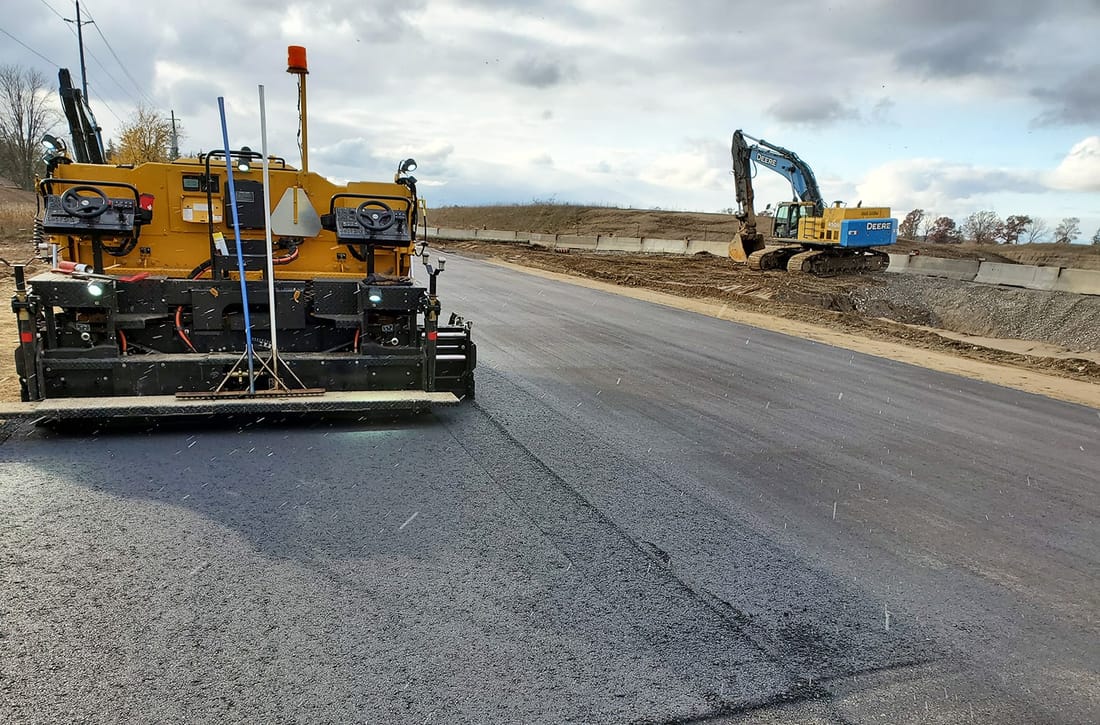
4) Binder course placement: The first new asphalt lift is usually a coarser aggregate mix, sometimes called the binder course. It provides structural strength and bridges any minor imperfections in the base. We monitor lift thickness and compaction with rolling patterns that are tuned to the specific mix and ambient conditions.
5) Surface course and compaction: The final lift is the wearing surface that traffic sees. We use state and city approved mixes and adjust roller timing and passes to achieve specified density. We pay special attention to joints at tie-ins, intersections, and around manholes so these do not become early failure points.
6) Final details: Precision Asphalt Indianapolis coordinates striping, utility adjustments, and signage so the road can be safely opened on time. For municipal jobs, we provide the documentation needed, such as mix tickets, compaction logs, and daily reports.
Material Choices and Design Options for Indianapolis Roads
Not every road or street in Indianapolis needs the same asphalt design. Precision Asphalt Indianapolis helps owners choose materials and sections that fit how the roadway will actually be used.
For residential streets, we often install a standard asphalt section composed of a compacted aggregate base, a binder lift, and a fine-graded surface lift that provides a smoother ride and quieter tire noise. On cul-de-sacs and low speed streets, a slightly smaller aggregate mix can reduce raveling around tight turning areas.
For bus routes, industrial parks, and logistics corridors, we lean toward thicker binder courses, higher quality base, and sometimes polymer modified asphalt binders in the surface mix to resist rutting from slow heavy traffic. Where truck turning movements are frequent, such as at distribution centers along I-465, we pay particular attention to intersection designs and approaches.
Owner budgets also play a role. If full reconstruction is not financially possible, we outline staged options. This can include partial depth recycling of the existing pavement, thicker structural overlays with limited base repairs, or targeted full-depth rebuilds in the worst segments combined with standard overlays elsewhere.
We follow INDOT and City of Indianapolis specifications when required, but we also explain where a private road or HOA street may not need the same level of design as a state route. That way property managers and municipal staff can see exactly what they are getting, why it was chosen, and the expected service life.
Common Road Problems in Indianapolis and How We Address Them
Indianapolis roads face a combination of freeze-thaw cycles, aging infrastructure, and heavy truck traffic. Precision Asphalt Indianapolis structures every road paving project to address the issues we see most often.
Freeze-thaw cracking and potholes: Water gets into old cracks, freezes, and expands. If a road already has a weak base or poor drainage, this quickly becomes potholes and broken edges. On resurfacing projects, we clean, fill, and level major cracks and low spots before overlay. Where cracking patterns show deeper failure, we mark out and remove those panels instead of simply paving over them.
Utility cuts and patchwork: Many city streets around Indianapolis have been cut and patched multiple times for water, sewer, and gas line work. These areas often fail first. When repaving, we either mill deeper around these patches or perform full-depth repairs so the final surface is uniform and structurally consistent.
Poor drainage and ponding: Standing water is a sign that slopes, gutters, or inlets are not working. Long term, this destroys asphalt. We re-establish proper cross slopes during milling, correct localized depressions with leveling courses, and can adjust curb or gutter lines as part of more extensive reconstruction. For private streets, we also look at driveway tie-ins that may be trapping water.
Rutting on truck routes: On industrial or bus routes, we often see wheel path rutting from slow heavy loads. We address this by specifying stiffer binder grades, thicker binder lifts, and better support in those lanes. Simply adding another thin overlay on a rutted surface will usually replicate the same problem in a few seasons, so we remove or reprofile the rutted sections first.
Cost Drivers and Scheduling for Road Paving Projects
The cost of road, street, and municipal paving in Indianapolis depends on several factors that owners and municipalities should understand before bidding or budgeting.
Project size and mobilization: Small municipal streets or short private roads still require moving in crews, pavers, rollers, and trucks. On very short segments, mobilization can be a meaningful portion of the cost. Combining nearby streets or phases often improves pricing because equipment and crews remain in one area longer.
Existing pavement and base condition: Roads that require heavy base repair, undercutting, or subgrade stabilization will cost more per linear foot than streets that only need a mill and overlay. This is why a site visit and, in some cases, pavement coring is essential before setting a realistic budget.
Traffic control and phasing: Paving a collector street that must remain partially open, or a downtown segment that requires night work, will cost more than paving a road that can be fully closed. Precision Asphalt Indianapolis builds traffic control and staging into every proposal so owners understand how we will keep residents, businesses, and emergency vehicles moving.
Access and tie-ins: Complex intersections, multiple commercial driveways, and frequent side streets require more handwork, additional saw cutting, and tighter scheduling. These details affect both cost and duration. We spell out our approach to driveway access, temporary ramps, and how long each section will be closed so residents and businesses know what to expect.
Season and weather: In central Indiana, we avoid placing surface lifts in cold or wet conditions when density and compaction would suffer. That means certain work must be done within core paving months. For time-sensitive municipal projects, we coordinate schedules early so critical segments are completed in the right part of the season.
What Indianapolis Owners and Agencies Can Expect From Us
When you hire Precision Asphalt Indianapolis for road, street, or municipal paving, you can expect a straightforward process and clear communication from planning through final striping.
We start with a walk-through or drive-through of the route, discuss known problems such as flooding spots, heavy truck zones, school zones, and bus stops, then propose specific repair and paving methods for each segment instead of a single generic approach. For HOAs and private communities, we can separate work into phases or streets so budgets are easier to manage and residents have clarity on timing.
Our project managers coordinate with city inspectors, utility providers, and, when needed, school districts and transit agencies so that paving days are scheduled around bus routes, pickup windows, and local events. This kind of planning matters in dense areas around downtown and Broad Ripple where closures can cause problems if not managed carefully.
After paving, we handle final striping, signage, and punch list items promptly. We can also provide a maintenance outline that shows when crack sealing, seal coating for private streets, or targeted patching should be scheduled to get the best life out of the new surface.
If you are planning a road paving project in Indianapolis or surrounding communities, Precision Asphalt Indianapolis can provide realistic options, clear pricing, and paving work that reflects how your road is actually used, not just how it looks on a plan.