Home › Parking Lot Repair & Replacement
Protect customers and vehicles with expert parking lot repair in Indianapolis, IN. We handle pothole patching, failed area removal, and full depth replacement when needed. Our crew works around business hours to minimize downtime and restore a safe driving surface. Schedule a free commercial parking lot inspection today.
Precision Asphalt Indianapolis provides professional parking lot repair throughout Indianapolis, IN, Indiana and the surrounding area. Our licensed, insured crew delivers safe, clean, on-time work with a free estimate before anything begins. Call (317) 793-2897 or request your free quote.
Practical Parking Lot Repair for Indianapolis Properties
Parking lots in Indianapolis see heavy use from employees, customers, and delivery trucks, plus freeze-thaw cycles that are hard on asphalt. Precision Asphalt Indianapolis focuses on straightforward parking lot repair and replacement that fits how commercial and multifamily properties in central Indiana are actually used.
We repair and replace parking lots at retail centers, churches, office parks, industrial buildings, and apartment communities across Indianapolis and surrounding suburbs. Our approach starts with a physical inspection and core sampling when needed, not just a quick visual look. We identify whether your issues are surface-level, such as raveling or isolated potholes, or structural, such as base failure and alligator cracking that runs through the full depth of the asphalt.
Before any work begins, we walk the lot with you, mark problem areas with paint, and separate what can be cost-effectively repaired from what really needs full-depth replacement. That way you are not paying to replace sections that still have years of life left, and you are not wasting money on patching areas that will fail again after another Indiana winter.
Common Parking Lot Problems We See in Indianapolis
Local conditions in Indianapolis create a predictable pattern of parking lot problems that we inspect for systematically.
Freeze-thaw cracking is one of the biggest causes of damage. Water enters small surface cracks in the fall, freezes, expands, and opens the crack wider. Over a few winters you end up with long linear cracks that let more water into the base. We use hot rubberized crack sealants specifically rated for Midwestern temperature swings to slow this process.
Alligator cracking (a network of small cracks that looks like reptile skin) tells us the asphalt surface and often the base are fatigued. In spots like dumpster pads, loading zones, and drive lanes at distribution facilities near I-465, this usually means the pavement was not built thick enough for the traffic it carries. Those areas typically need full-depth removal and replacement with a stronger section, not just a thin overlay.
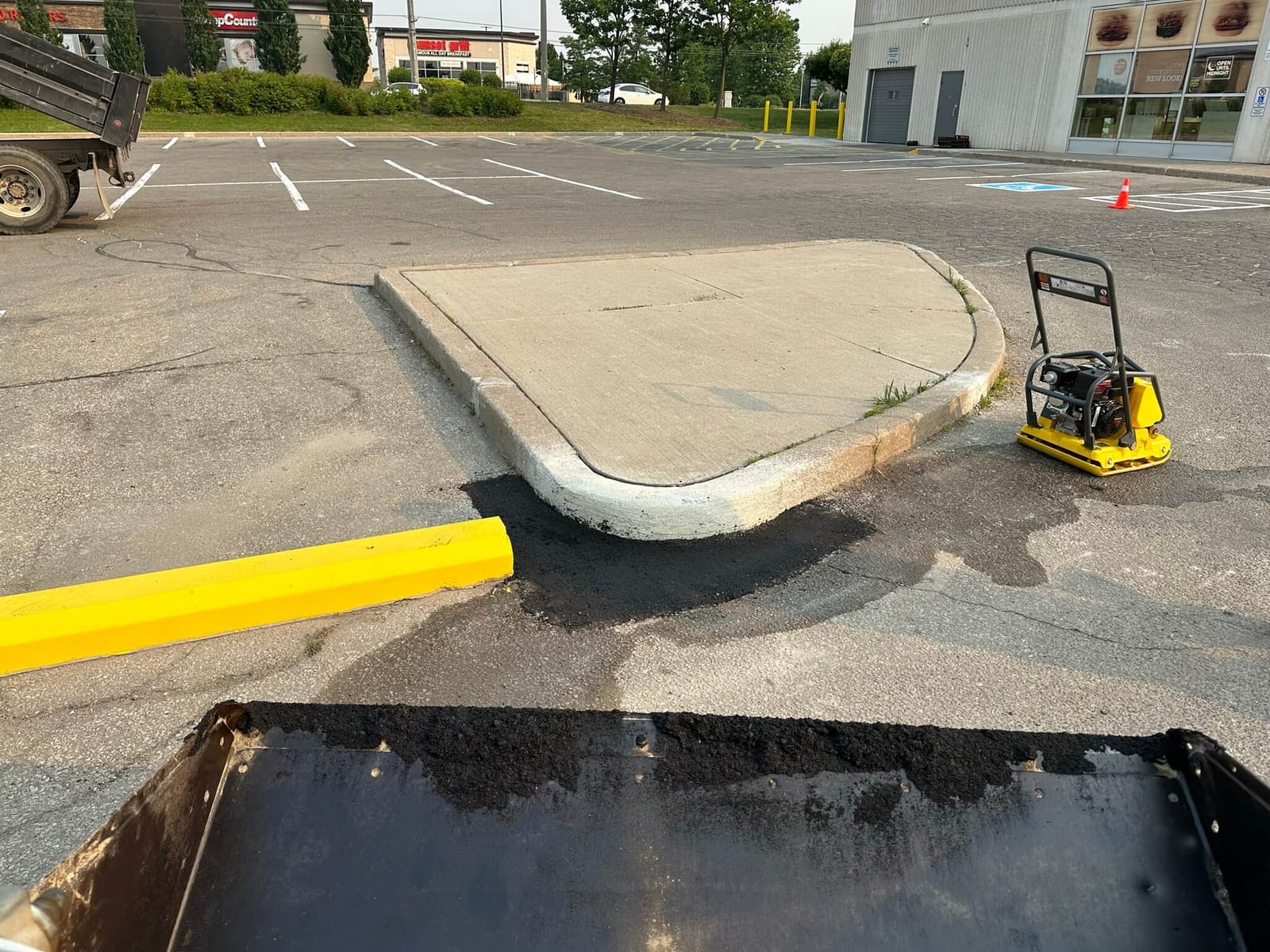
Potholes in Indianapolis often appear after plowing and late-winter frosting. A proper pothole repair is not just filling the hole. We cut the edges square, remove loose debris, compact the base, install hot mix asphalt in lifts, and compact it to match the surrounding surface. This helps avoid the familiar problem of “patches popping out” within a few months.
Drainage issues are another major cause of recurring repair costs. Lots along US-31, Washington Street, and older industrial sites often have low spots that hold water after storms. Standing water accelerates surface failure, especially in winter. During inspection, we shoot grades to see if regrading, milling, or additional catch basins are needed so you are not repairing the same puddle areas every year.
How Precision Asphalt Indianapolis Repairs Parking Lots
Parking lot repair is not a single service. It is a set of options that we choose from based on your lot’s age, traffic, and budget. Precision Asphalt Indianapolis will usually recommend a mix of these methods instead of one blanket solution across the entire property.
Crack sealing: For structurally sound lots with visible linear cracks, we clean the cracks mechanically, use hot air or a heat lance when needed to dry them, then fill them with a hot rubberized sealant. This slows water intrusion and is often the most cost-effective way to extend life on retail and church parking lots.
Pothole and patch repairs: For isolated failures, we cut out the damaged area, recompact or replace the base stone, then install and compact hot mix asphalt. For Indianapolis properties that cannot shut down traffic for long, such as medical offices, we phase these repairs by section so you keep access.
Skin patching and surface repairs: When the top layer is raveling or lightly cracked but the base is still sound, we may mill a shallow depth and place a new surface course. This is useful around entry drives where appearance matters but budgets are tight.
Infrared repair: In certain cases we use infrared heaters to reheat localized areas, blend new asphalt with existing, and compact. This can be efficient for small depressions or rough joints that need smoothing without cutting out a large section.
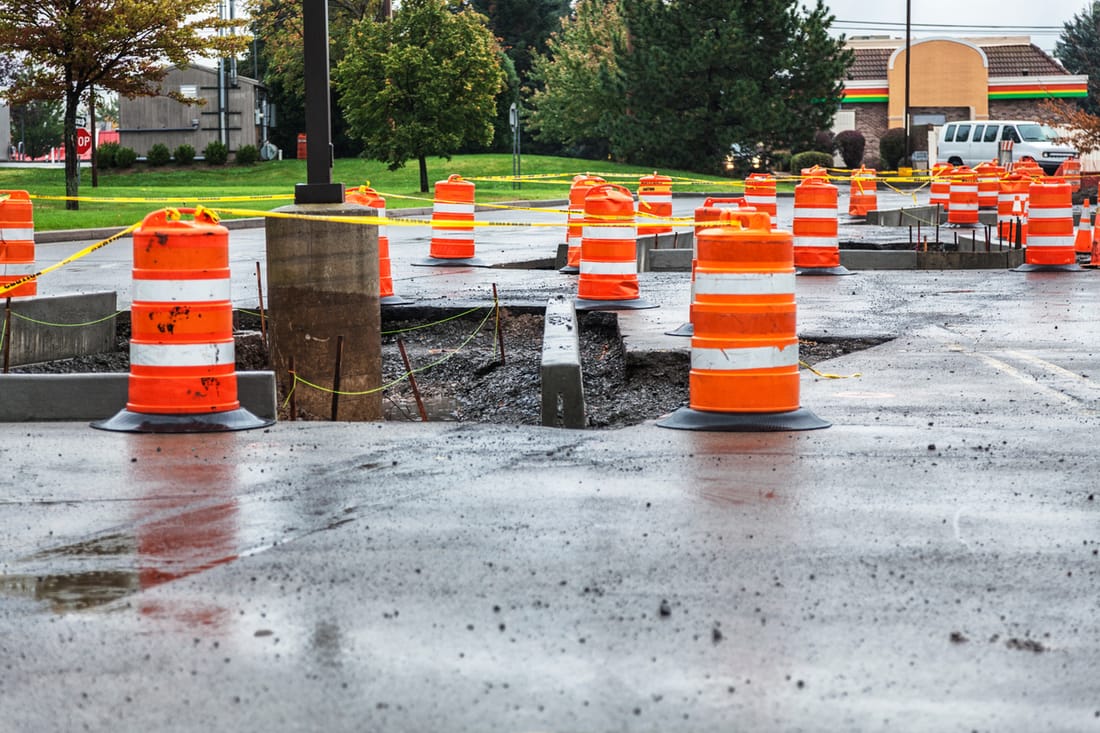
Throughout the process, we manage traffic with cones, tape, and clear signage so customers and tenants know where to park. For downtown Indianapolis and Broad Ripple sites with limited parking, we often schedule repairs in off hours or weekends to reduce disruption.
When a Full Parking Lot Replacement Makes Sense
At some point, patching an Indianapolis lot stops being cost-effective. Precision Asphalt Indianapolis typically recommends partial or full replacement when more than 30 to 40 percent of the surface shows structural distress, or when there is widespread base failure.
A typical replacement process starts with milling or excavating the existing asphalt. On older lots in areas like Castleton, Southport, and speedway corridors, we often find thin pavement over an underbuilt base. In those cases, we remove soft or saturated base material and rebuild it with compacted aggregate 53s or similar stone to the proper depth. Good base work is what prevents your new lot from settling and cracking within a few years.
Once the base is stable and graded for drainage, we place new asphalt in one or more lifts. For light-duty parking areas, a typical section might be 2 to 3 inches of surface asphalt over a compacted base. For heavy-duty truck lanes, dumpsters, and loading docks, we increase asphalt thickness or add an intermediate binder course to better handle repeated loading.
We also use replacement as a chance to fix long-standing layout and safety issues. That might mean adjusting parking stall widths, adding accessible parking that meets ADA slope and striping standards, improving turning radii for delivery trucks, or reconfiguring traffic flow to reduce near misses at busy entrances.
After paving, we compact the asphalt with steel drum and pneumatic rollers, then allow proper cooling before striping. Lot closure times are planned around your business hours so you are not unexpectedly shut down.
Cost Factors and Planning Your Parking Lot Project
Parking lot repair and replacement costs in Indianapolis vary based on a few key factors that we will review with you in plain numbers, not vague ranges.
Size and layout: A simple rectangular lot at an office building near Keystone may cost less per square foot to repair or replace than a smaller lot with many islands, turns, and handwork. Irregular shapes require more crew time and detailed finishing.
Condition and base issues: If your lot only needs crack sealing and patching, your cost will be far lower than a lot that requires digging out and rebuilding soft subgrade. We use core samples on larger projects to see exactly how thick your current asphalt is and what the base looks like before we commit you to a replacement plan.
Traffic load: An apartment complex with passenger vehicles can use a different section design than a manufacturing facility with regular semi traffic. Heavier-duty pavement costs more up front, but prevents expensive failures like rutting and base pumping.
Scheduling and phasing: If work must be done only at night or in tightly staged phases, such as at a busy retail center on the north or south side, labor and mobilization costs are higher. We often help property managers map out a multi-year plan, addressing the worst areas first and budgeting future sections.
Before you sign with anyone, ask for a clear scope that explains repair types by area, thicknesses, and base repairs, not just one lump price. Precision Asphalt Indianapolis provides color-marked site plans and written scopes so you can compare options and justify the project to owners or boards.
What Indianapolis Property Owners Should Look For in a Paving Contractor
Hiring the right paving contractor for parking lot repair in Indianapolis is the difference between a surface that lasts and one that fails after a couple of winters. Precision Asphalt Indianapolis encourages you to be selective, even if you do not choose us.
First, ask for recent local references that match your property type. A contractor who only does residential driveways is not the best choice for a 150,000 square foot retail lot. We maintain reference lists for office parks, industrial, and multifamily sites around the metro area so you can see our work and talk with facility managers.
Second, look for contractors who discuss drainage, base condition, traffic load, and phasing, not just “resurfacing” in general terms. If no one brings up slope or catch basins, they are not addressing one of the main reasons lots fail early in central Indiana.
Third, confirm that the proposal explains materials and application methods, including compacted thicknesses, number of lifts, and types of mix. Vague descriptions like “2 coats of asphalt” are a red flag. You should know exactly what is going under your customers’ tires.
Finally, make sure you understand the maintenance plan once the work is done. A new or repaired lot will last longer with a simple schedule for crack sealing, sealcoating when appropriate, and periodic striping. We provide that plan with every major repair or replacement project so you can budget for upkeep instead of waiting for the next major failure.