Home › Industrial and Heavy-Duty Asphalt Paving
Handle heavy loads with industrial asphalt paving in Indianapolis, IN. We design and build thick duty pavements for truck yards, loading docks, and warehouse areas. Our engineered sections and strong bases stand up to constant traffic and turning. Request a site visit and heavy duty asphalt paving estimate today.
Precision Asphalt Indianapolis provides professional industrial asphalt paving throughout Indianapolis, IN, Indiana and the surrounding area. Our licensed, insured crew delivers safe, clean, on-time work with a free estimate before anything begins. Call (317) 793-2897 or request your free quote.
Industrial asphalt paving that holds up to real-world abuse
Industrial and heavy-duty asphalt paving in Indianapolis is all about building pavement that can survive forklifts, semi trucks, loaders, and constant turning traffic. At Precision Asphalt Indianapolis, we design every project around the actual loading and use patterns on your site, not just a standard parking lot template.
The starting point is a site visit. We walk your property with you, talk through where trucks queue, where forklifts pivot, where trailers get dropped, and where drainage or frost issues have shown up in the past. In central Indiana, the freeze-thaw cycles and clay soils under many industrial parks are a bigger threat than traffic alone, so we probe and, when needed, core the existing pavement or subgrade to see what is really underneath.
From there, we recommend a pavement section that is specific to your operation. A light industrial loading dock might use a thicker asphalt base course and moderate surface mix, while a heavy distribution yard on the south side of Indianapolis that sees daily 80,000 lb truck traffic may need full-depth asphalt with an upgraded binder and, in some cases, a stabilized stone base. We explain each option in plain language and show you where extra strength is worth the investment and where it is not.
How industrial asphalt paving is actually built, step by step
Once you approve a plan, the industrial asphalt paving process follows a deliberate sequence to control cost, schedule, and performance.
1. Layout and traffic planning: We mark out work zones so your operations can continue safely. For 24/7 facilities in Indianapolis, such as food distribution or manufacturing plants, we often phase the project so you never fully shut down your yard or dock area.
2. Demolition and proof-rolling: Old failed asphalt, concrete slabs, or unstable stone are removed. We then proof-roll the exposed subgrade with a loaded truck or roller. If the ground pumps or deflects, we know we need undercutting or stabilization before we proceed.
3. Subgrade repair and stabilization: For soft or wet Indiana soils, we may undercut poor areas and replace them with compacted aggregate, or use soil stabilization techniques (such as adding cement or lime) to create a firmer base. Skipping this step is one of the fastest ways to end up with ruts and alligator cracking within a few seasons.
4. Aggregate base installation: We place a compacted stone base with the right thickness for your load requirements, often heavier in truck lanes and loading zones. Stone is graded with GPS or laser where needed to ensure correct slopes away from buildings and dock doors.
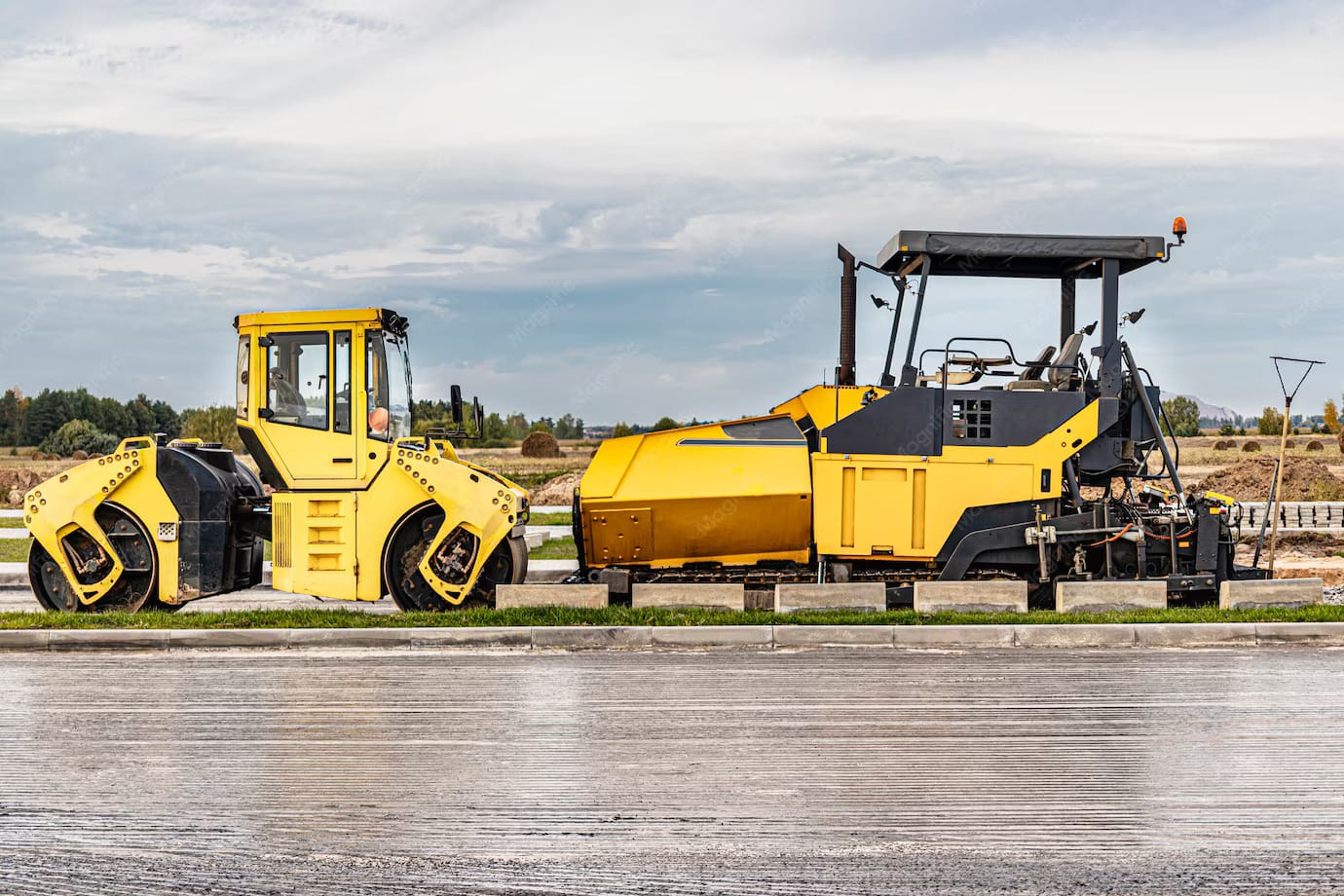
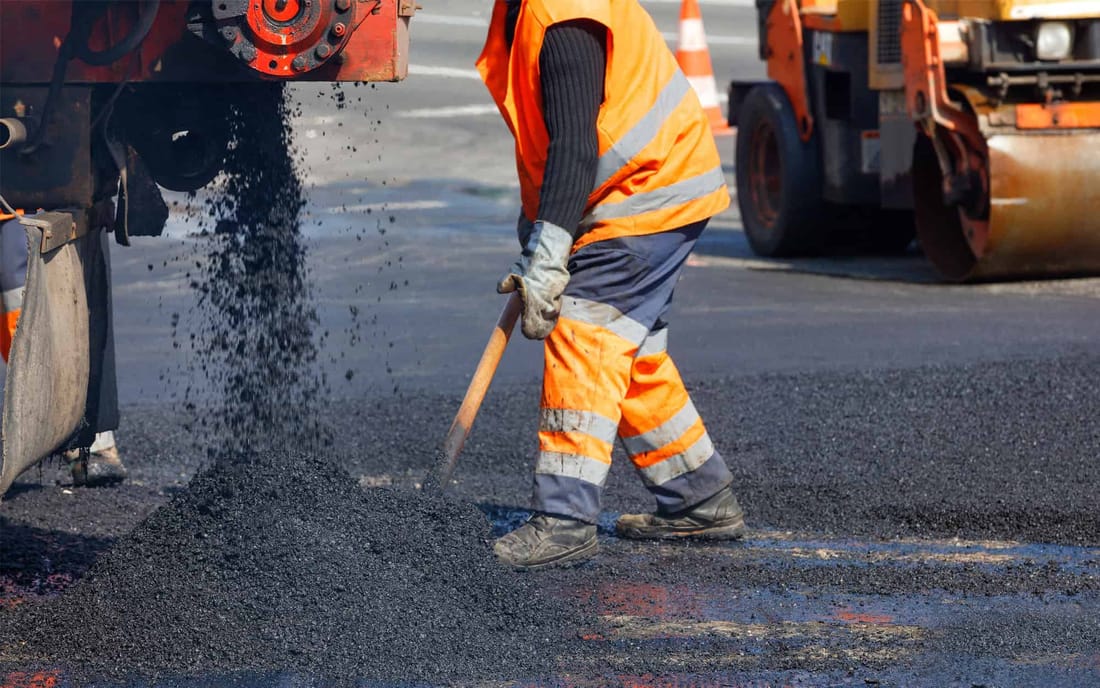
5. Asphalt placement: For industrial asphalt paving, we typically install multiple lifts. A thicker, coarser base course goes down first, followed by an intermediate course (if required) and a tighter surface course. Each lift is placed with a paver, compacted with steel and pneumatic rollers, and checked for density. Higher density means less air voids and better resistance to fuel, oil, and water intrusion.
6. Final details: We mill tie-ins at dock doors, concrete aprons, and public streets to give you smooth transitions. Then we stripe, install wheel stops if requested, and coordinate any signage so your crews can jump right back into full operations.
Material choices, thicknesses, and what really affects your cost
On an industrial project, cost is driven primarily by three things: thickness, materials, and how much subgrade correction is required. Precision Asphalt Indianapolis walks you through these factors so you can choose where to invest and where to save without compromising structural integrity.
Thickness: For heavy-duty asphalt paving in Indianapolis, truck lanes and loading zones often range from 6 to 10 inches of asphalt, sometimes built as 2 or 3 separate lifts. Parking stalls for employee vehicles can often be built thinner, which lowers cost. We commonly design variable thickness sections on the same site so you are not overbuilding low-stress areas.
Mix types: Industrial surfaces near fueling areas and loading docks face drips of diesel, hydraulic oil, and solvents. We often recommend a higher performance binder and a tighter surface mix with lower air voids in those zones. In turning or braking areas, coarse surface mixes can be used to resist shoving and rutting. For high-speed internal roads, a smoother mix improves ride quality.
Subgrade and base: In many parts of Indianapolis and the surrounding industrial parks, the native soils include silty clays that hold water. If we discover weak subgrade during proof-rolling, we will discuss options like thicker stone base, fabric separation, or soil stabilization. These steps add upfront cost but prevent expensive structural failures later. We are honest about where those upgrades are truly needed and where they are not.
Phasing and access: If your facility must stay open, phasing the work and using night or weekend shifts can slightly increase the project cost, but it avoids lost productivity in your business. We provide clear phasing plans so you can factor that trade-off into your budget.
Industrial paving problems we see in Indianapolis and how we prevent them
Because Precision Asphalt Indianapolis works on plants, warehouses, and distribution centers across central Indiana, we see the same patterns of failure repeat when industrial asphalt paving is done too lightly or without regard for local conditions.
Common issues include rutting in truck wheel paths, reflective cracking over old concrete slabs, standing water at building corners, and edge failures where asphalt meets gravel or grass. In winter, water trapped in poorly drained areas can freeze and expand, which leads to heaving and broken pavement by spring.
We address these by designing heavier sections exactly where the loads occur, not just using a uniform thickness. In truck lanes, we often include thicker asphalt bases and sometimes recommend reinforcing the interface with concrete in extreme loading zones such as trash compactor pads or tight turning areas. Where asphalt overlays old concrete, we saw and seal joints or provide stress relief layers to minimize reflective cracking.
Drainage is another big factor in Indianapolis industrial yards. Snow piles, roof downspouts, and poorly placed catch basins can wash out edges and keep pavement saturated. We review where your snow is pushed, how water currently flows, and adjust grades, basin placements, or add additional inlets to keep water off the pavement structure. Attention to these details during design and installation is what separates a pavement that fails in 5 years from one that lasts 15 or more under heavy loads.
What to expect working with Precision Asphalt Indianapolis
When you reach out about industrial asphalt paving, our first step is a conversation about your operation. We want to understand your heaviest equipment, seasonal traffic patterns, shift schedules, safety requirements, and any upcoming expansions. That lets us propose a solution that fits both your current use and your future plans.
Next, we visit your site in person anywhere in the Indianapolis area, from older industrial corridors to newer parks near I-70 and I-465. We document existing conditions, drainage, and access constraints, then provide a written proposal with a clear pavement section, scope, and project phasing. You will see exactly what thicknesses you are paying for and where we recommend upgrading or value engineering.
During construction, a dedicated project manager coordinates with your facility or operations managers so trucks, employees, and visitors always know which areas are open. We schedule high-disruption activities, such as tie-ins at dock doors or plant entrances, at times that least affect your operations. Our crews keep the site clean and safe, which matters when you have ongoing forklift and pedestrian traffic.
After the paving is complete, we walk the project with you to review workmanship, confirm drainage performance, and talk through a realistic maintenance plan. For most industrial facilities, this includes a schedule for crack sealing, spot repairs in extremely high stress areas, and future resurfacing options. The goal is to help you budget long term and avoid surprises, not just hand you a new surface and disappear.
If you are planning a new facility or need to rebuild a failing yard or loading area, Precision Asphalt Indianapolis can also coordinate with your engineer or general contractor early in the design process. Getting the industrial asphalt paving section right before construction starts often saves money and avoids costly redesigns later in the project.