Home › Asphalt Striping and Pavement Markings
Improve safety and flow with professional asphalt striping in Indianapolis, IN. We lay out and paint parking stalls, ADA spaces, arrows, and other pavement markings to current standards. Fresh lines make lots easier to navigate and more attractive. Schedule your pavement marking and restriping quote today.
Precision Asphalt Indianapolis provides professional asphalt striping throughout Indianapolis, IN, Indiana and the surrounding area. Our licensed, insured crew delivers safe, clean, on-time work with a free estimate before anything begins. Call (317) 793-2897 or request your free quote.
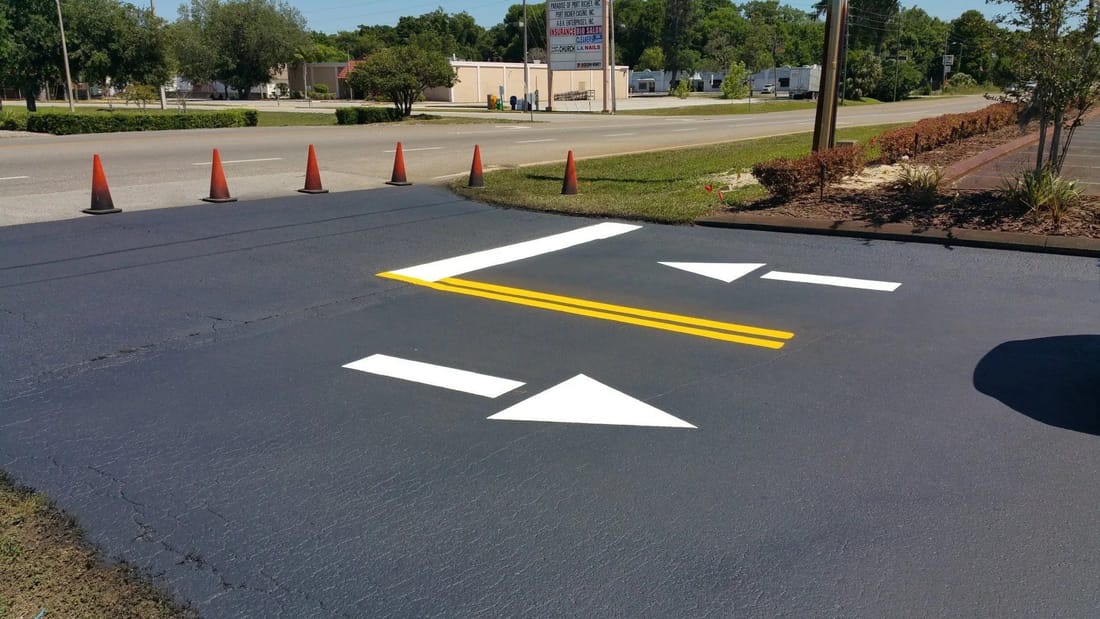
Clear, code-compliant asphalt striping for Indianapolis properties
Well planned asphalt striping is what turns a paved surface into a safe, efficient parking lot or driveway. Precision Asphalt Indianapolis focuses on practical layout, visibility, and local code compliance for businesses, churches, HOAs, schools, and small commercial lots across Indianapolis, IN.
Instead of using a one-size-fits-all template, we walk your property, look at how vehicles actually move, and ask how your lot is used on a busy day. That means accounting for Indy traffic patterns, snow piles in winter, delivery truck routes, and the mix of cars, pickups, and larger vehicles you see. From there, we design or refresh asphalt striping that fits your space and keeps people moving safely.
Our team is familiar with Marion County and Indianapolis zoning expectations, typical fire lane standards, and ADA layout practices for accessible parking. We combine that local knowledge with durable striping materials so your markings are easy to understand and hold up to our freeze-thaw cycles, road salt, and summer heat.
How our asphalt striping process works, step by step
Every asphalt striping and pavement marking project with Precision Asphalt Indianapolis follows a clear, repeatable process so you know what will happen and when.
1. Site review and measurement
We walk the entire lot, measure spaces and driving lanes, and note existing traffic issues. We mark drainage areas, steep grades, and tight turns where certain markings or arrows can improve safety. If striping already exists, we evaluate whether it should be followed, modified, or removed.
2. Layout and planning
We sketch a proposed layout that includes parking stall counts, accessible spaces, fire lanes, crosswalks, loading zones, and any specialty spaces such as curbside pickup or short term parking. For many Indianapolis customers, we create a layout that fits delivery trucks behind the building while keeping customer spots close to entrances.
3. Surface preparation
Good striping depends on a clean, dry surface. We remove loose debris with blowers or brooms, scrape off mud and heavy dirt, and address oil spots with an oil treatment primer when needed. On sealed or newly paved lots, we confirm the surface has cured enough to accept paint, which is especially important in Indiana humidity and summer heat.
4. Marking and taping
For complex layouts and specialty symbols, we chalk or snap lines and use stencils or temporary tape to make sure angles and spacing are exact. This step matters for ADA stalls, hatch areas, and crosswalks where a few inches off can create long-term confusion or non-compliance.
5. Striping application
We apply paint using professional airless striping machines, which produce crisp, consistent lines at the right thickness. Each line is applied at a controlled speed and pressure so the coating is not too thin, which would fade quickly, and not so thick that it peels.
6. Final check and touch-ups
Once the paint flashes off, we walk the lot again, check widths, spacing, and symbol clarity, and correct any light spots or overspray. We then remove any temporary cones or barricades when it is safe for traffic.
Paint and material options that work in Indiana weather
Indianapolis has hot summers, cold winters, and frequent freeze-thaw cycles, so material choice matters more than many property owners realize. Precision Asphalt Indianapolis recommends specific paints and beads based on how your lot is used and what the budget allows.
Most parking lots in our area are striped with either waterborne acrylic traffic paint or solvent-based paint. Waterborne paints are low odor, cure quickly in the right temperatures, and work well for light to moderate traffic. Solvent-based paints can perform better on older, chalky asphalt and in slightly colder conditions, but we choose them carefully to meet environmental rules.
For high-visibility needs, such as crosswalks near school entrances or medical facilities, we can broadcast glass beads into fresh paint so headlights reflect back at night or in wet conditions. We also offer different colors for specific uses: white for standard stalls, yellow for no-parking or divider lines, blue for accessible spaces, and red or stenciled markings for fire lanes and emergency zones.
Timing is important in Indiana. We schedule most asphalt striping in Indianapolis between late spring and early fall when surface temperatures and overnight lows allow paint to cure correctly. When possible, we avoid striping just before a hard rain or during extremely humid days, which can delay drying. If you must stripe in shoulder seasons, we adjust material choice and work hours to give the markings the best chance to cure before traffic returns.
Designing parking layouts that fit your Indianapolis property
Beyond just painting lines, effective asphalt striping is about designing a layout that works for your specific site. Precision Asphalt Indianapolis focuses on function and safety first, then appearance.
We help you choose between 90 degree, angled, or parallel parking depending on your lot shape and traffic patterns. In tight urban Indianapolis locations, 60 degree or 45 degree angled stalls can make it easier for drivers to enter and exit spaces. In more open suburban lots, straight stalls can maximize total space count.
We also plan drive aisles that allow emergency vehicles and delivery trucks to move without clipping parked cars. That often means slightly wider lanes where trucks turn, or dedicated loading zones with striping that clearly separates them from customer parking.
Accessible parking is a key part of any design. We place ADA stalls near the primary entrance with the correct access aisles, signage, and pavement symbols. For churches, medical offices, and senior housing around Indianapolis, we often recommend a few more accessible spaces than the bare minimum, based on actual visitor needs.
If you have recurring issues like wrong-way traffic, people cutting across empty areas, or confusion at exits, we can incorporate arrows, stop bars, and painted “Do Not Enter” markings to guide drivers more clearly.
What affects asphalt striping cost in Indianapolis
Customers frequently ask why striping quotes differ so much. The price of asphalt striping and pavement markings is driven by several practical factors, and Precision Asphalt Indianapolis is transparent about what you are paying for.
The main cost drivers include:
Lot size and layout complexity. A simple rectangle lot with straight parking rows is faster and more economical than a winding layout with islands, multiple entrances, and many specialty markings.
Number and type of markings. Standard parking lines are one cost component. Additional items such as crosswalks, arrows, ADA symbols, numbers or letters on stalls, loading zones, curb painting, and custom logos all add time and materials.
Condition of existing striping. If old markings are heavily built up, incorrect, or peeling, we may need to black out or grind certain areas before repainting. That extra surface preparation protects the new layout and prevents confusion but does add cost.
Time of day and traffic control. Many Indianapolis businesses prefer evening or weekend striping so customer access is not disrupted. Working off-hours often requires additional crew coordination and temporary barricades or cones, which affects pricing.
Material selection. Premium paints and reflective beads cost more up front but can be a better value for high traffic lots where downtime for frequent restriping is expensive.
We provide written estimates that break out these elements so you can see the cost impact of adding or removing specific features, such as extra arrows or numbered spots.
Common striping problems and how we prevent them
Indianapolis property owners often call us to fix striping issues that could have been avoided. Precision Asphalt Indianapolis focuses on prevention so your markings last longer and stay clear.
Fading too quickly. This usually happens when paint is applied too thin, onto a dirty surface, or in poor weather. We prep thoroughly, watch temperature and humidity, and apply paint at the manufacturer recommended thickness so the color holds up through seasons of UV exposure and snow removal.
Crooked or inconsistent lines. Uneven lines are more than cosmetic, they make parking inefficient and can reduce stall count. Our crews use string lines, chalk, and measured references, then follow them with professional striping machines, not just freehand wands.
Peeling or flaking. This often occurs when new paint is laid over soft sealcoat that has not cured or over old paint without proper cleaning. When we see peeling risk, we recommend either waiting for better curing conditions or doing extra prep, even if it adds a step, to avoid early failure.
Confusing layouts. We see lots where arrows point different directions, or loading zones look like parking spaces. During layout planning, we walk through travel paths as if we were first time visitors and adjust markings so the route through the lot is intuitive.
Snowplow damage. Indianapolis winters bring snowplows that can scrape or scuff markings. While no striping is completely immune, using the correct paint and thickness helps markings remain visible longer even after plowing. We can also suggest plow practices to your contractor, such as avoiding aggressive blade angles directly on fresh linework.
When and why to restripe your Indianapolis pavement
Most Indianapolis parking lots need restriping every 18 to 36 months, depending on traffic volume, sun exposure, use of deicing salts, and snowplow activity. High turnover retail centers and busy medical offices may need annual touch ups, especially on drive lanes and crosswalks where tires and plows are most active.
A practical rule of thumb is that if you cannot clearly see the lines from a moving vehicle, it is time to restripe. Faded markings increase the risk of fender benders, parking in fire lanes, or blocked accessible aisles. Municipal inspectors and insurance carriers also look at pavement markings as part of overall safety.
The ideal time for restriping in Indianapolis is late spring through early fall when surfaces are dry and warm, usually above 50 degrees for several hours. We often schedule work for early mornings or evenings when lots are less busy. For multi-tenant properties, we can stage the work so each area is only out of service for a short period.
When you contact Precision Asphalt Indianapolis, we will ask about your busiest hours, typical customer patterns, and any upcoming events or rush periods. Then we build a work plan that minimizes disruption while giving the paint enough time to cure. The result is clear, consistent asphalt striping and pavement markings that keep your property orderly, safe, and welcoming to everyone who visits.