Home › Asphalt Driveway Repair & Replacement
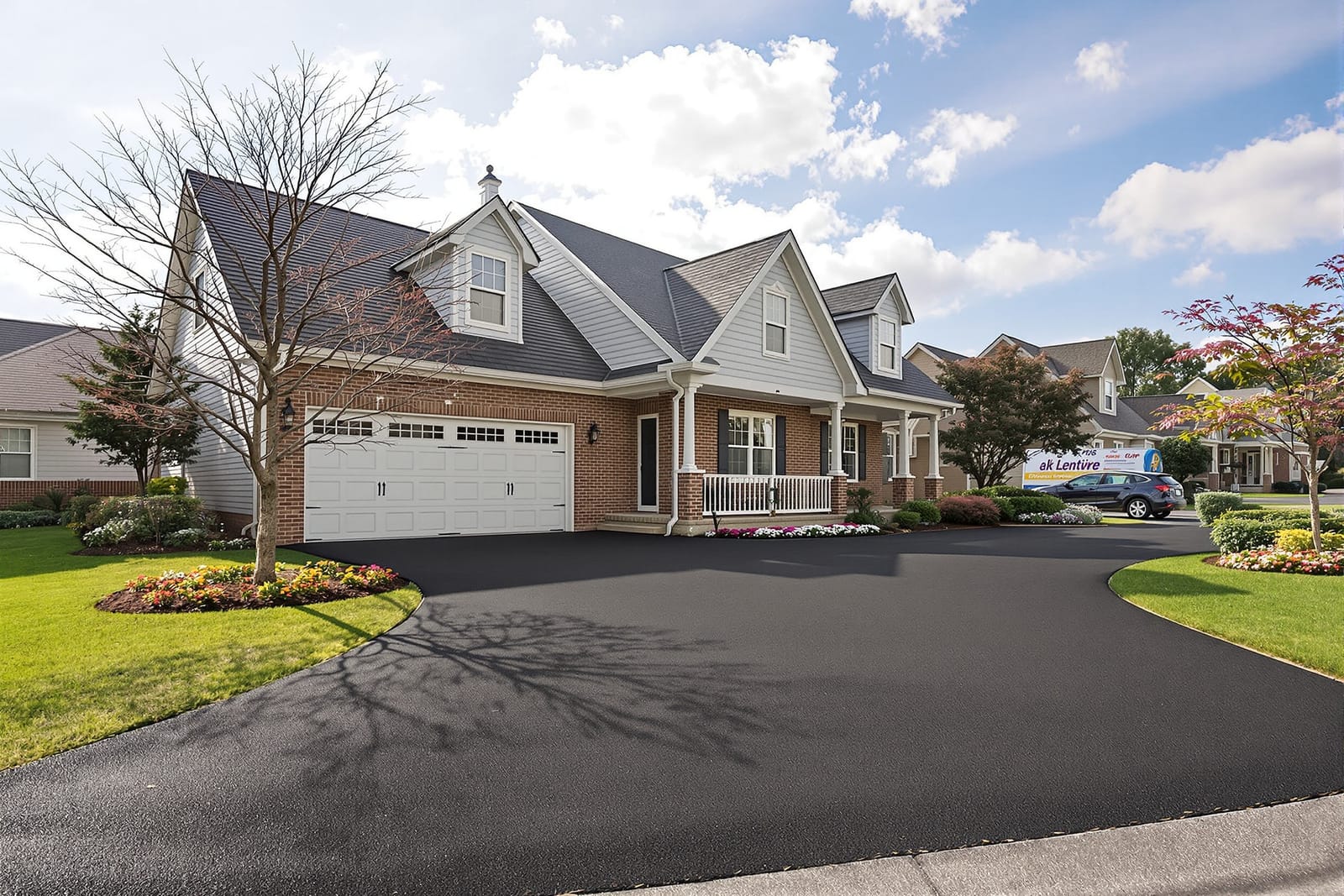
Restore your driveway with professional asphalt driveway repair in Indianapolis, IN. We fix cracks, potholes, and failing areas before they spread. When patching is not enough, we provide full asphalt driveway replacement tailored to your property. Get a clear, honest repair recommendation and free quote today.
Precision Asphalt Indianapolis provides professional asphalt driveway repair throughout Indianapolis, IN, Indiana and the surrounding area. Our licensed, insured crew delivers safe, clean, on-time work with a free estimate before anything begins. Call (317) 793-2897 or request your free quote.
Asphalt driveway repair in Indianapolis that fits your home and climate
If you live in Indianapolis, you already know our freeze-thaw cycles and road salt are tough on asphalt driveways. At Precision Asphalt Indianapolis, we focus specifically on driveway repair and replacement that holds up to central Indiana weather, not just a quick patch that looks good for a month.
We work on everything from narrow 1950s bungalow driveways in Broad Ripple to wide suburban drives in Fishers and Greenwood, as well as older, alligatored asphalt in neighborhoods like Irvington and Washington Township. Before we talk cost or schedule, we start with a detailed visual inspection and basic measurements. We look for drainage issues, base failures, and where water is entering through small cracks. That inspection is what tells us whether your driveway can be cost-effectively repaired or if you are better off with a full replacement.
You will never get a one-size-fits-all recommendation from us. For example, a 10-year-old driveway with a few isolated potholes from snowplow damage is usually a repair project. A 25-year-old driveway that dips toward the garage and collects standing water after a rainstorm often needs partial or full replacement. We explain your options on site, show you the problem areas, and give you a written plan so you can make a clear decision before spending a dollar.
How we repair asphalt driveways: from cracks to potholes
Most Indianapolis driveways do not need to be torn out the first time they show wear. Precision Asphalt Indianapolis uses a step-by-step repair process that targets the specific problems we find.
For small to medium cracks, we start by cleaning the crack thoroughly with compressed air or wire brushing to remove dirt, plant roots, and loose debris. On wider cracks, we may saw-cut the edges for a more stable joint. Once cleaned, we apply a hot rubberized crack sealant or a high-quality cold-pour sealer, depending on the crack width and current temperature. This seals out moisture so winter freeze-thaw cycles cannot widen the damage.
For potholes or localized sink spots, we square off the area with a saw or cutting wheel so that we are not just filling an irregular hole. We remove the broken asphalt and any soft base material underneath. If the stone base is saturated or pumping when we walk on it, we add and compact new aggregate to rebuild support. Then we install hot mix asphalt, compacted in lifts with a plate compactor or small roller, and feather the edges into the surrounding driveway so you do not end up with a noticeable bump.
Spider web or “alligator” cracking is often a sign of base failure, especially on the older driveways you see on the north side and near downtown. In those cases, we typically recommend a remove-and-replace patch. That means we cut out the entire cracked area, fix the base, and then install new asphalt to the proper thickness. If more than 30 to 40 percent of the driveway has this type of cracking, we will discuss whether a full replacement is more cost effective than patching piece by piece.
Once repairs are complete, we usually recommend a sealcoat after the asphalt has cured, especially if the driveway sees regular de-icing salt. Sealcoat is not a repair by itself, but it does protect the new work and extend the life of your driveway.
Full driveway replacement: what actually happens and how long it takes
When spot repairs are no longer enough, a full asphalt driveway replacement may be the smarter long-term choice. Precision Asphalt Indianapolis follows a consistent process so you know what to expect from demolition to final cleanup.
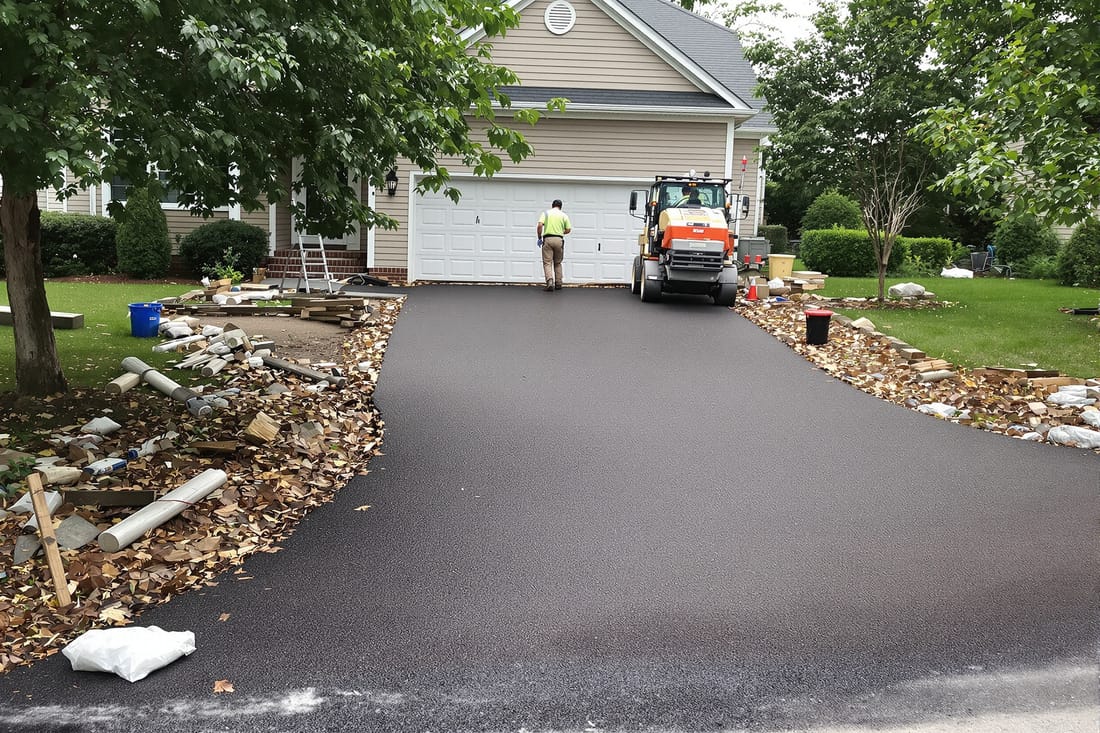
First, we remove the existing asphalt. On most Indianapolis residential driveways, we use a skid steer with a milling attachment or bucket to peel up the old surface in manageable sections. The material is hauled off to an asphalt recycling facility rather than dumped, which keeps disposal costs reasonable.
Once the old asphalt is gone, we inspect the base. Many older homes in areas like Meridian-Kessler and Speedway have thin or uneven stone bases under the driveway. If we find soft spots, clay pockets, or areas that hold water, we dig those out and replace them with compacted aggregate, usually a limestone mix that compacts very tightly. Proper base prep is what keeps a new driveway from settling or cracking in a few years.
Next, we grade the base to establish correct drainage away from your house, garage, and walkways. In Indianapolis, a lot of driveways slope toward the garage, which leads to water pooling and icing in winter. We correct the pitch where possible so water moves toward the street or a side yard instead. Then we compact the base with a vibratory roller so it is solid and uniform.
For residential driveways, we typically install 2.5 to 3 inches of hot mix asphalt after compaction. On longer drives or where heavy vehicles like RVs, trailers, or work trucks are common, we may recommend 3.5 inches or a two-lift system. The hot mix is installed while it is still workable, spread evenly, and compacted with a roller to a smooth finish.
Most standard Indianapolis driveways take 1 to 2 days of active work, depending on weather and size, plus some curing time. You can usually walk on a new driveway within 24 hours and drive on it within 3 to 5 days, depending on temperature. We will give you specific timing and care instructions on site, including when to avoid parking in the same spot repeatedly and how to manage edges while the asphalt is still firming up.
Design and material options for Indianapolis homes
A driveway is not just a strip of black from the street to the garage. When we repair or replace an asphalt driveway, Precision Asphalt Indianapolis can recommend small design choices that improve both function and curb appeal, especially for the mix of older and newer homes around Indianapolis.
If you have a narrow city lot in neighborhoods like Fountain Square or near Butler, we can widen the drive slightly as part of a replacement, within local setback rules, so entering and exiting is easier. For suburban cul-de-sac homes, we can adjust the layout to add a parking pad or a turn-around area so you are not always backing into the street.
On the material side, we primarily use hot mix asphalt that meets Indiana DOT specifications, which performs better in our temperature swings than cheaper mixes. For driveways that see heavy use from delivery vans, work trucks, or trailers, we can use a slightly different mix with more stone content for added strength.
We also pay attention to edge support. Many older Indianapolis driveways simply end with a sharp edge that eventually crumbles. When we replace or significantly repair a driveway, we recommend compacted shoulder material at the edges, such as topsoil or stone, to support tires and minimize cracking along the sides.
If you want a cleaner finished look, we can discuss adding defined borders later, like concrete edging or pavers, but we keep the core of the project focused on a strong, well-drained asphalt surface. During the estimate, we walk you through realistic options for your specific property, including what local conditions like tree roots or shared drives with neighbors may mean for your design choices.
Costs, scheduling, and what to ask before you hire anyone
Cost for asphalt driveway repair or replacement in Indianapolis depends on several specific factors: total square footage, how much base work is needed, access for equipment, and whether we are doing targeted repairs or a full tear-out. Small crack filling and pothole repairs are usually a few hundred dollars, while full replacements for typical two-car driveways can run into the several thousands. On site, Precision Asphalt Indianapolis provides a written quote that breaks out base repair, asphalt installation, and any optional items so you see exactly what you are paying for.
Season and weather also affect pricing and scheduling. In central Indiana, our main paving season runs from roughly April through early November, with peak demand in late spring and early fall. If you are hoping to complete a full replacement before the first hard freeze, it is smart to get on the schedule early. Emergency repairs for safety hazards, such as deep holes near garage doors or trip hazards by sidewalks, can often be squeezed in faster.
Before you hire anyone for asphalt driveway repair, there are a few key questions you should ask. Ask what thickness of asphalt they plan to install after compaction and whether they will address base problems or just “cap” the existing surface. In many older Indianapolis neighborhoods, simply putting a thin overlay over a failing base is a short-term bandage that will crack quickly. Also ask how they handle drainage corrections, especially if you currently have ice build-up or water against your foundation.
You should also ask about insurance, references, and how long you should wait before driving or parking on the new surface. At Precision Asphalt Indianapolis, we are happy to walk you through past driveway projects in areas similar to yours so you can see how the work holds up. We also provide written care instructions, such as how to avoid scuffing fresh asphalt in hot weather and when to consider the first sealcoat.
If you are unsure whether your driveway needs repair or full replacement, we can start with an honest inspection and a straightforward explanation of both options. That way, you get a driveway that fits your budget and holds up to many more Indiana winters without surprise issues.